Project Overview
At the Diffuse Optics Imaging of Tissue (DOIT) Lab at Tufts University, I designed and fabricated the mechanical housing and optical light-delivery system for a prototype pulse oximeter using SolidWorks, COMSOL, and FDM/SLA 3D printing.
Skills Demonstrated & Key Accomplishments
- Skills Demonstrated: 3D CAD & Assembly Modeling (SolidWorks), First-Principles Optical Design (Snell's Law & COMSOL Ray Tracing), Design for Additive Manufacturing (FDM & SLA), Empirical Validation (Broadband Spectrometer), Snap-Fit Enclosure Design.
- Compact Waveguide Innovation: Replaced fragile, expensive 3 mm right-angle glass prisms (which consumed 6 mm per measurement site) with custom-printed Formlabs Clear Resin V4.1 optical channels that house the laser diodes directly.
- DFM Iteration: Resolved 3D-printing nozzle tolerance failures on micro-scale dovetail joints by re-engineering the laser enclosure with snap-fit tabs and slots for repeatable, tool-free assembly.
- Spring Mechanism Adaptation: Engineered a compact axial-restoring torsion spring routing channel after off-the-shelf McMaster-Carr torsion springs exceeded target clamping force.
Engineering First Principles: Dual-Ratio Method
Conventional single-distance pulse oximeters often overestimate arterial blood oxygen saturation (SpO₂) in patients with darker skin tones because epidermal melanin absorbs and scatters transmitted light.
To eliminate this bias, this device implements the dual-ratio (self-calibrating) method developed in diffuse optics research [1]. By pairing two laser diode wavelengths (660 nm red and 940 nm near-infrared) across two symmetrical source-detector distances spaced 10 mm apart, static superficial tissue absorption (melanin) and optical coupling variations cancel out mathematically while isolating deep pulsatile arterial blood absorption [1, 2].
Design Iteration
-
Hinge Geometry & Clamping Force Optimization
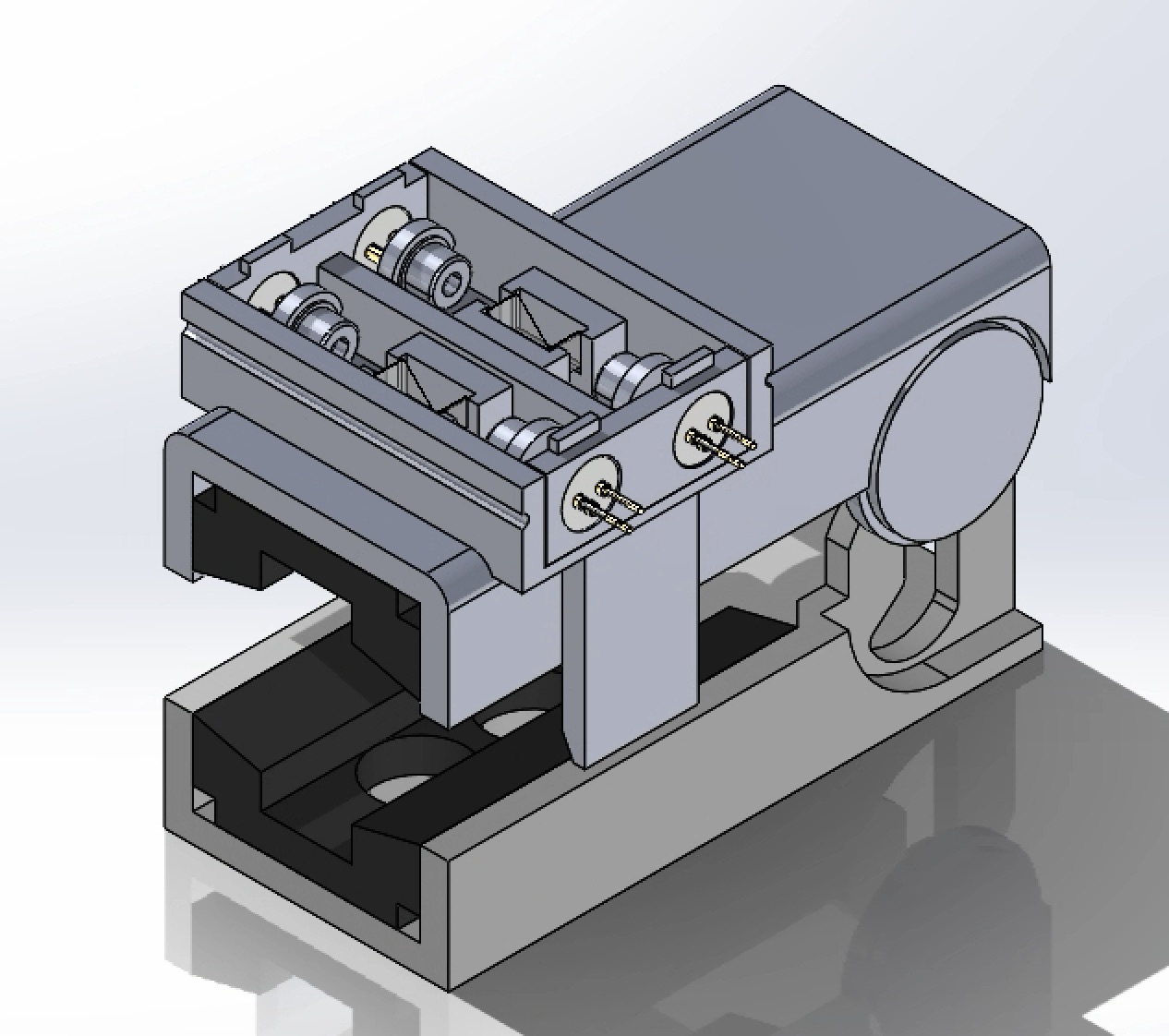
To accommodate a wide range of finger sizes while maintaining consistent optical contact, I modeled the chassis around a combined rotational hinge and vertical translation joint (inspired by commercial Sino-K reference geometry) in SolidWorks.
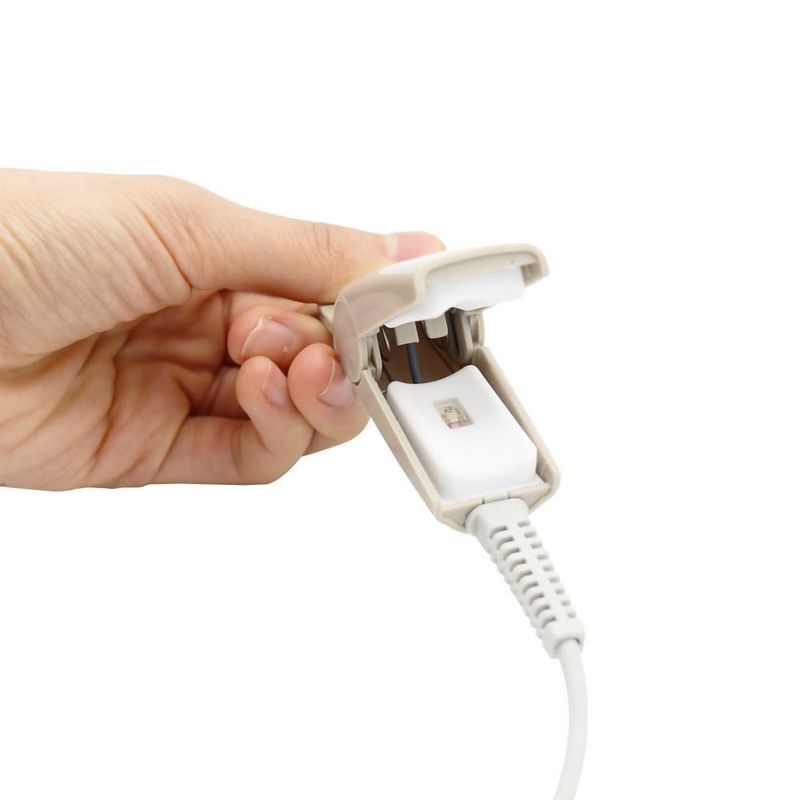
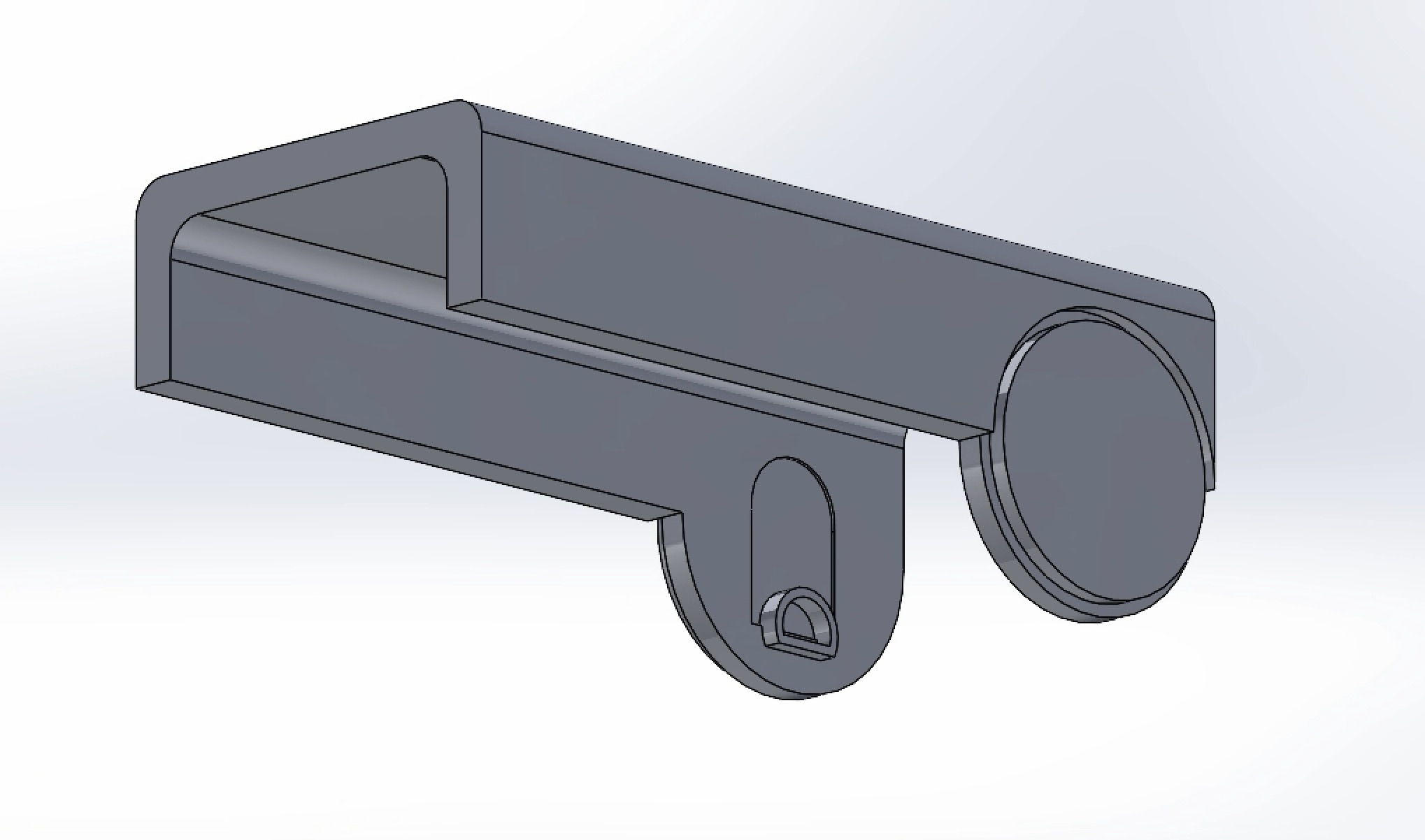
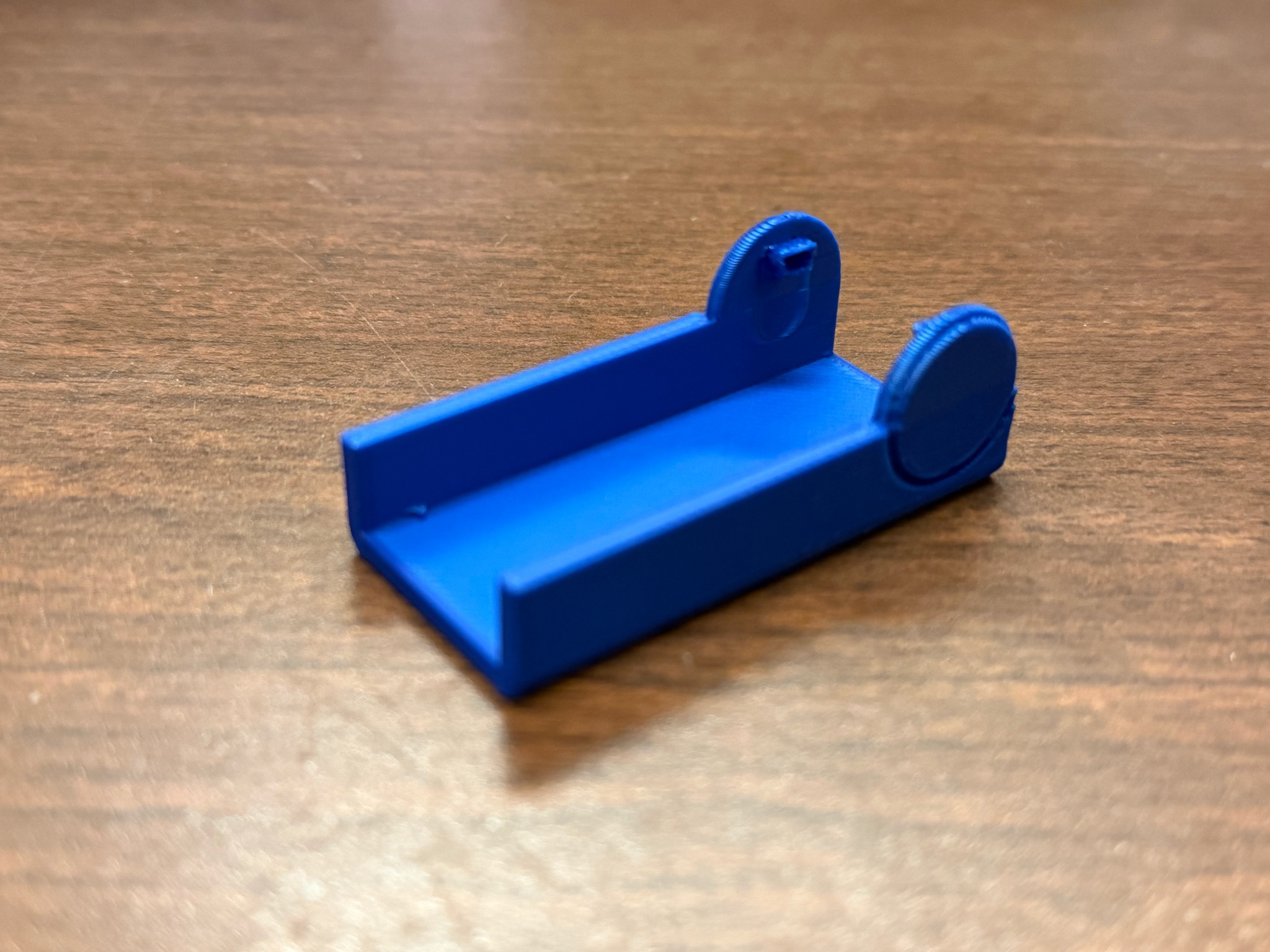
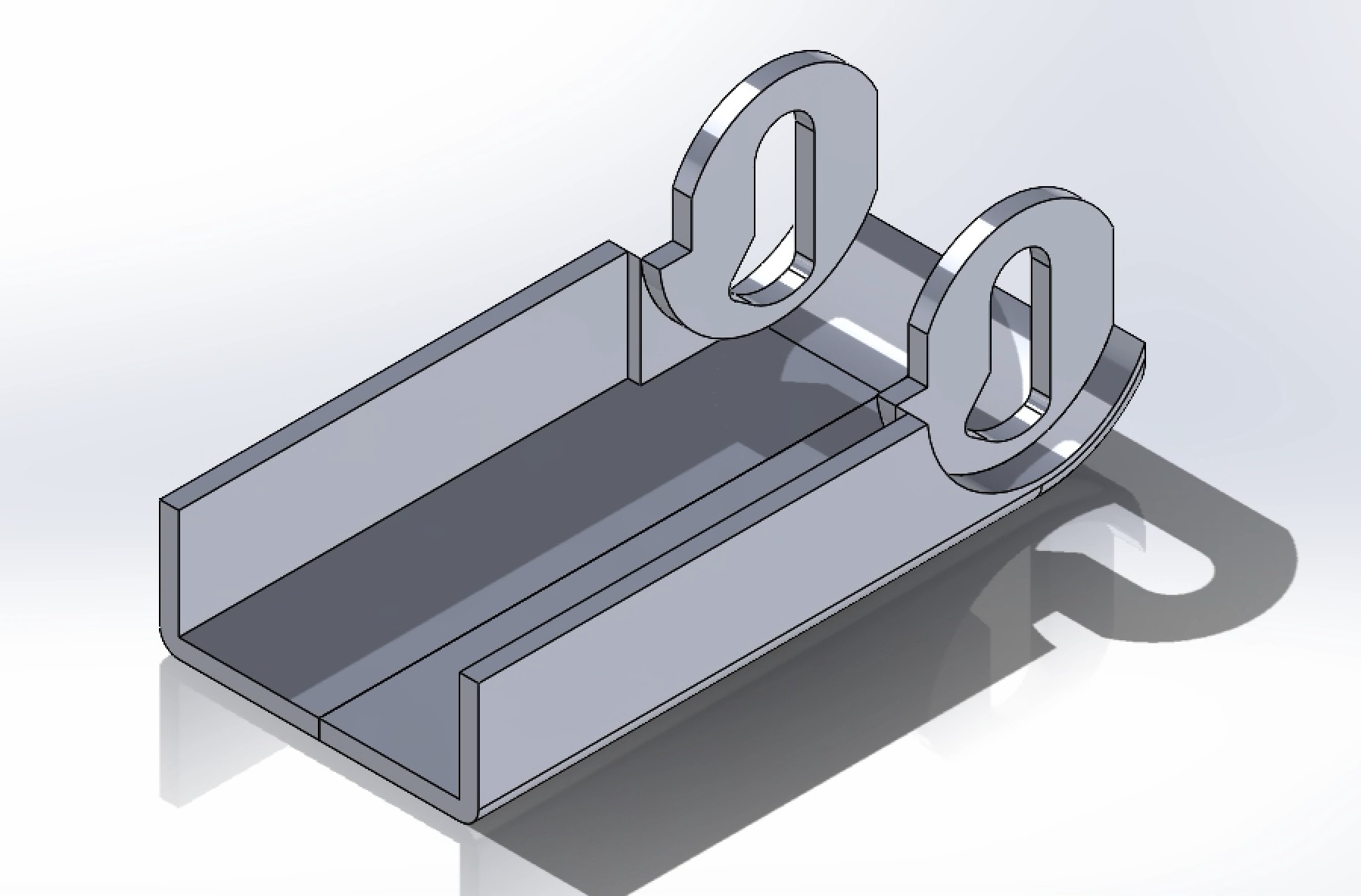
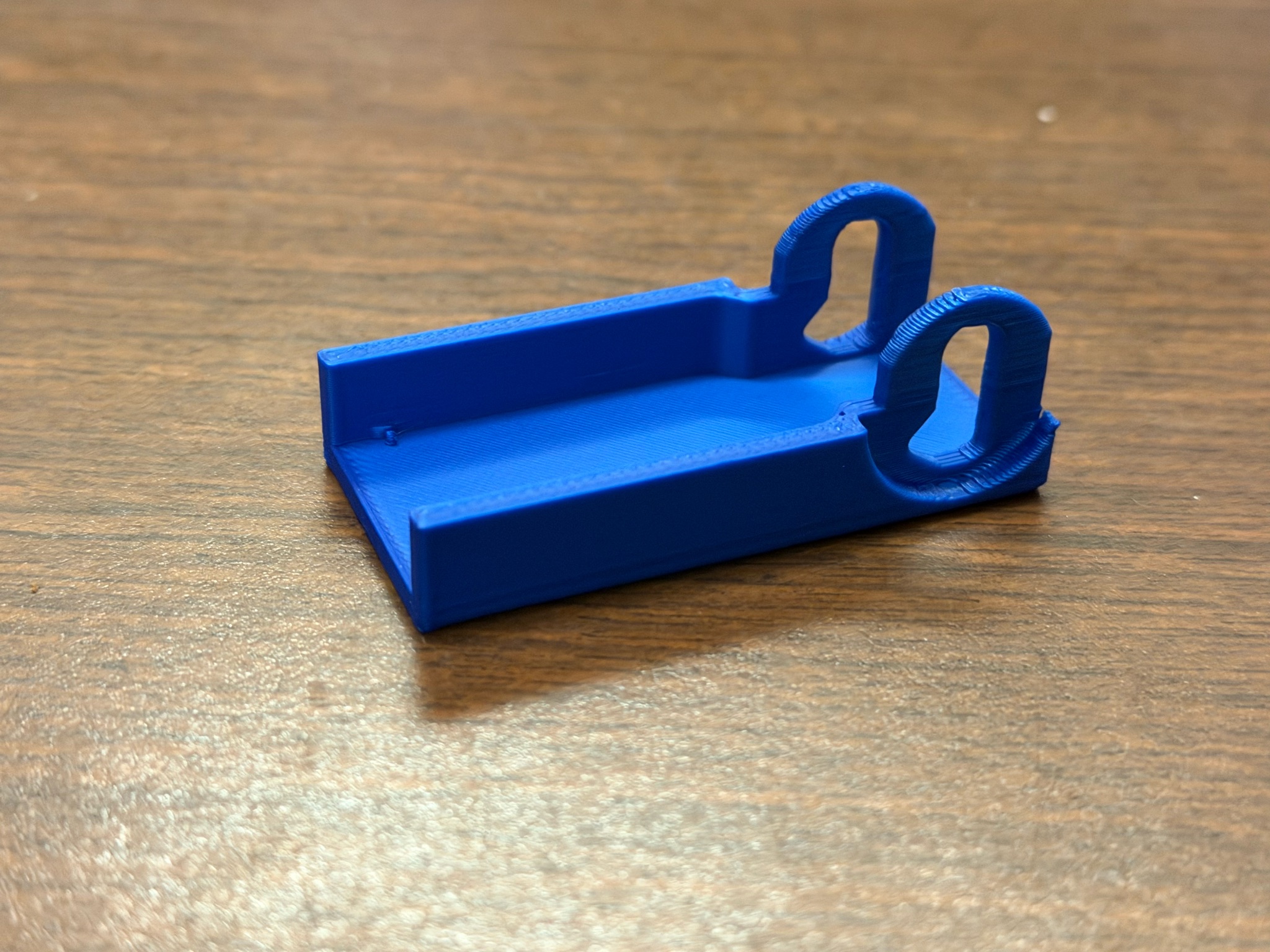
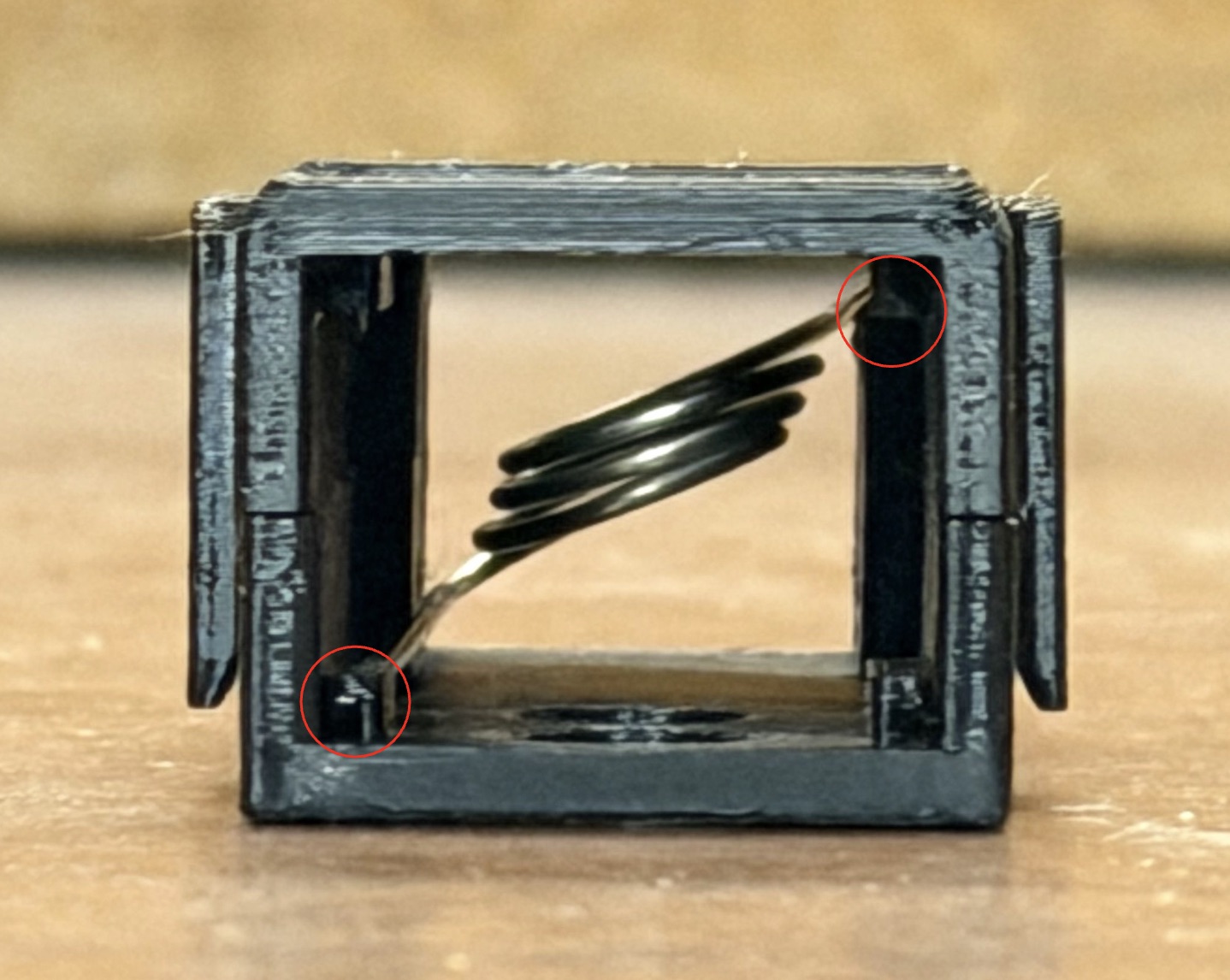
Standard off-the-shelf torsion springs from McMaster-Carr exerted excessive clamping force for finger comfort and thin-walled FDM parts. I re-engineered the spring mounting by routing a single spring through opposing internal channels in the chassis, utilizing the spring's axial restoring force to achieve smooth, compliant clamping pressure.
-
Laser Diode Enclosure: Dovetail to Snap-Fit Iteration
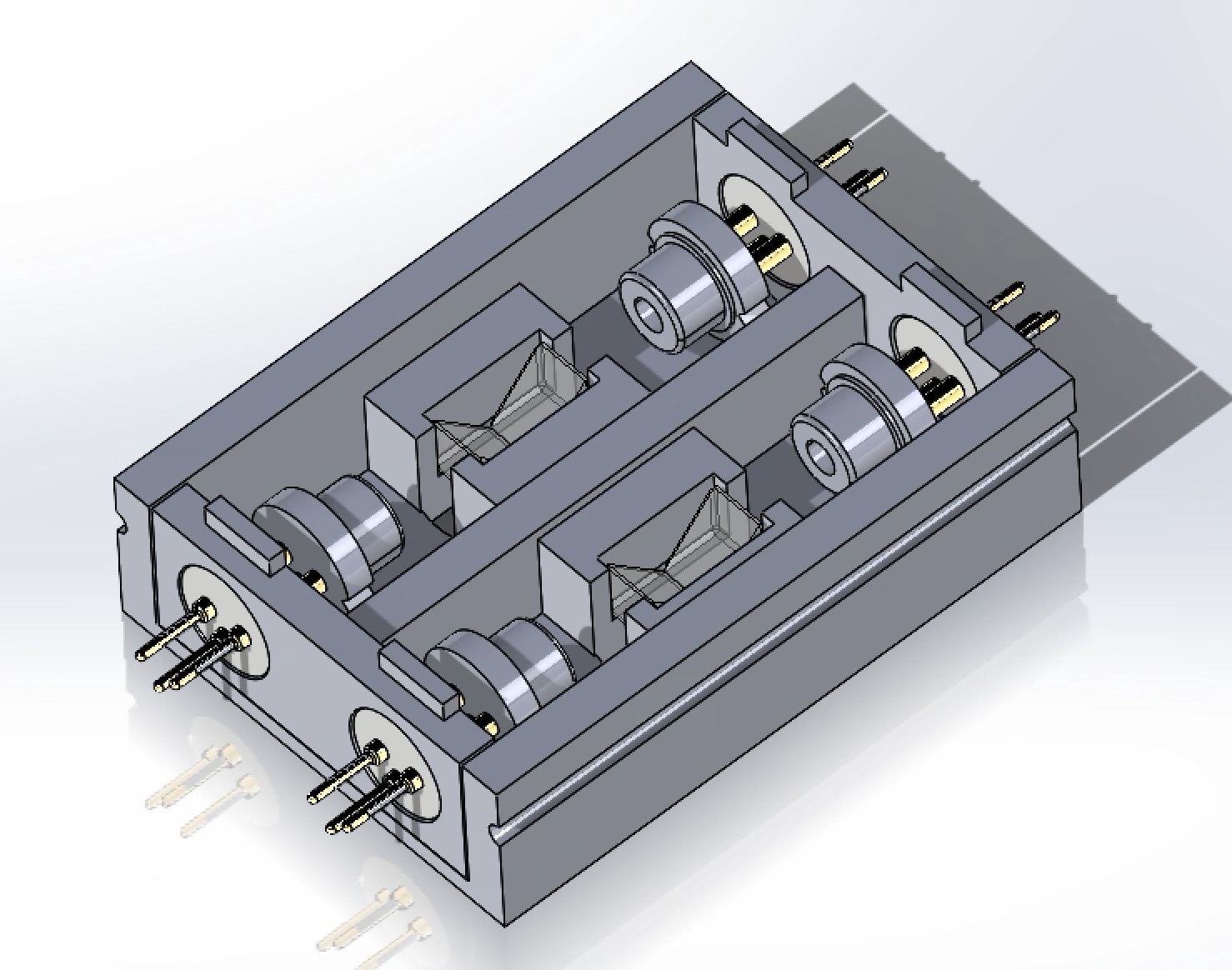
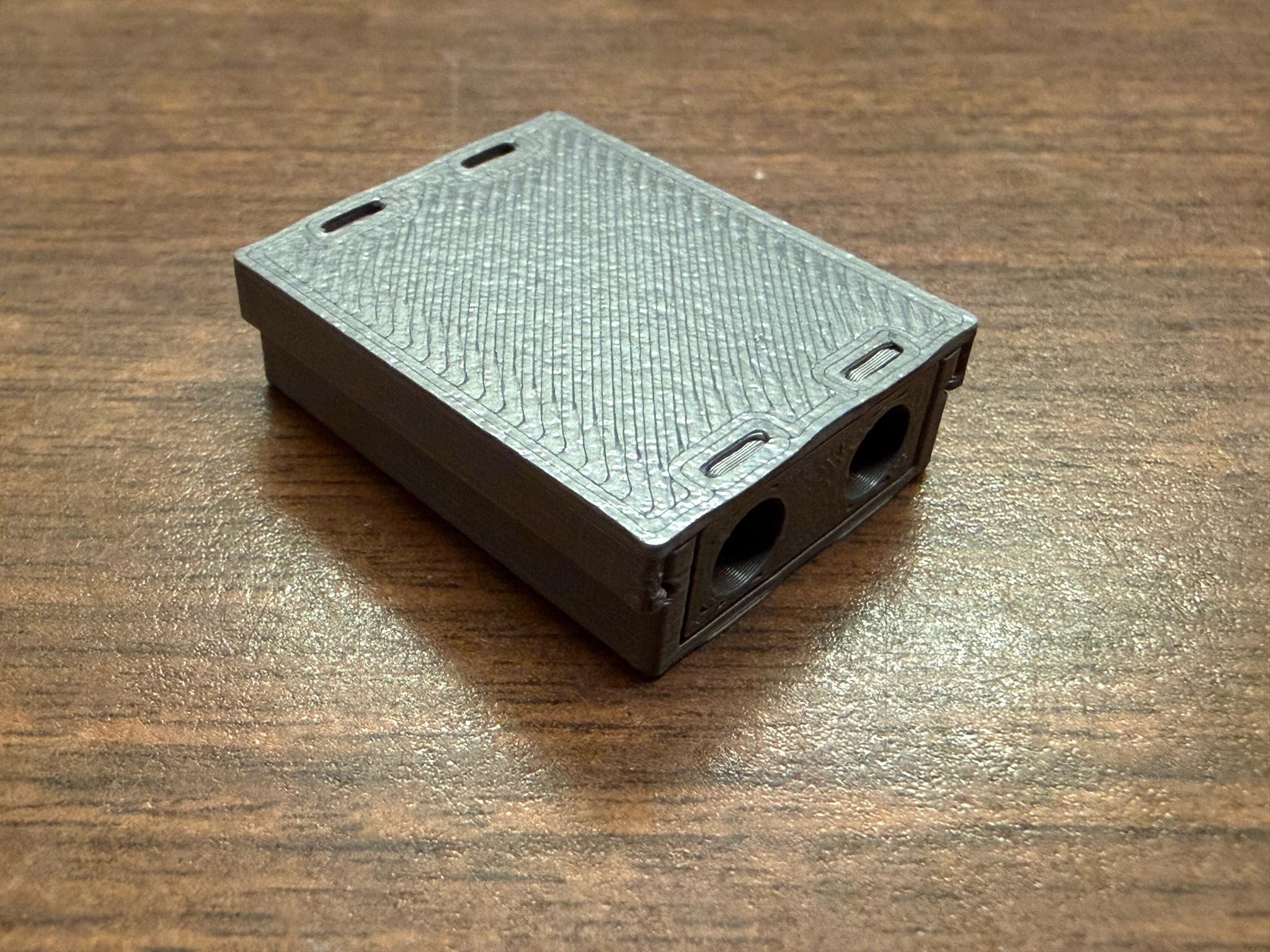
The dual-ratio configuration requires 4 laser diodes total: a co-located 660 nm and 940 nm pair, repeated 10 mm away. My initial enclosure featured a prism seat with removable dovetail-jointed walls and lid.
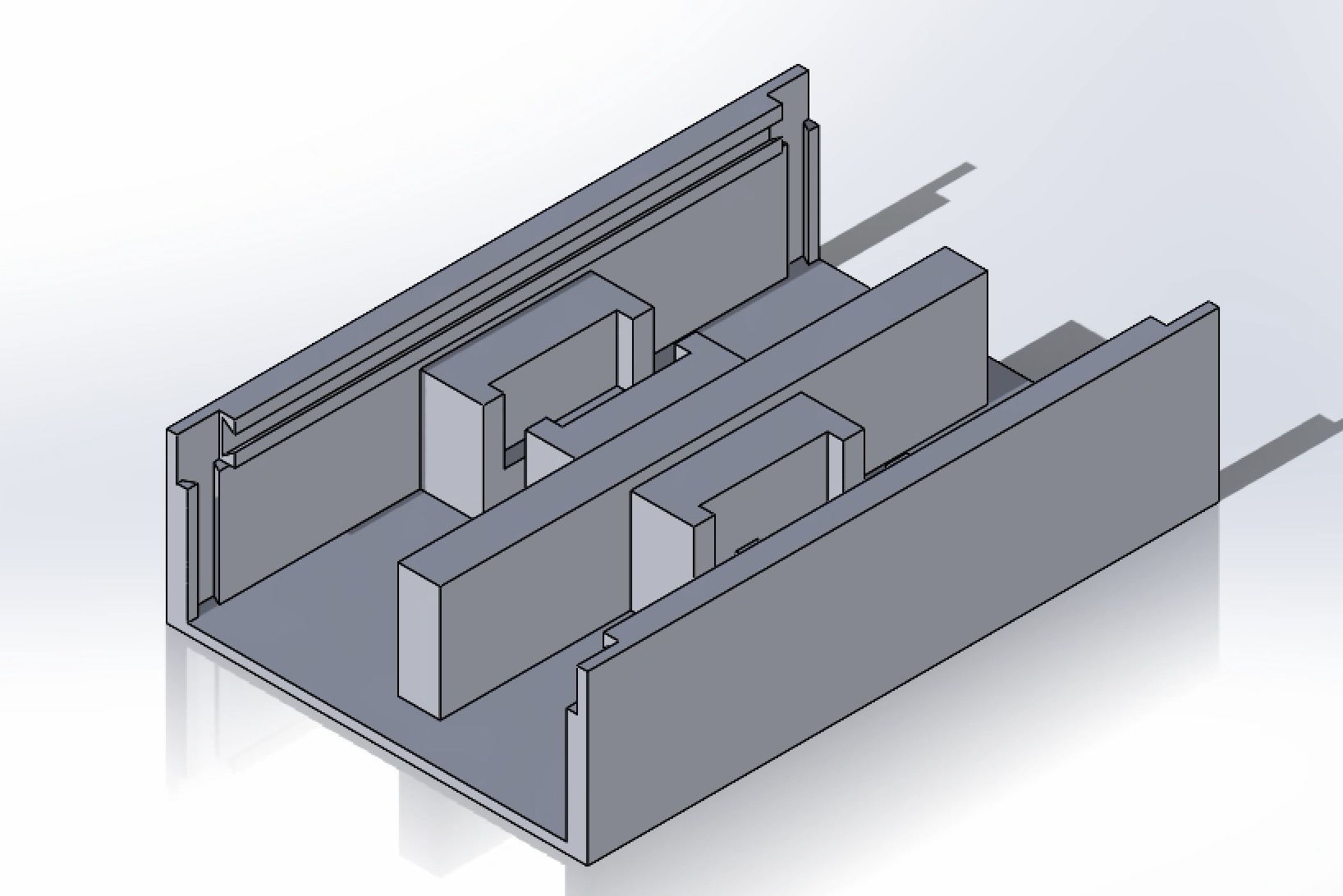
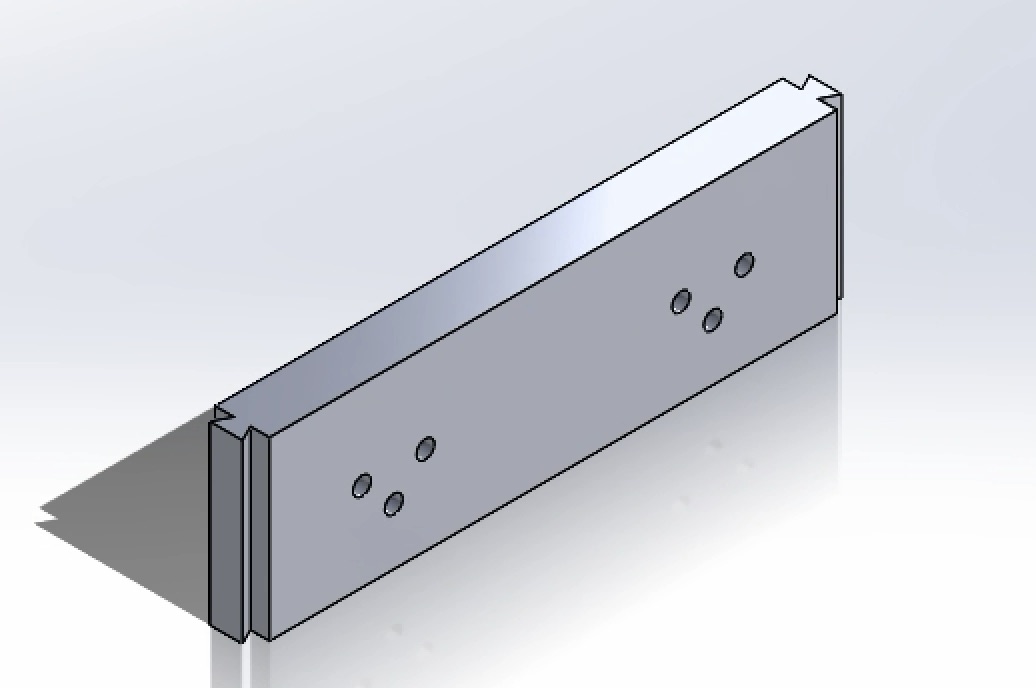
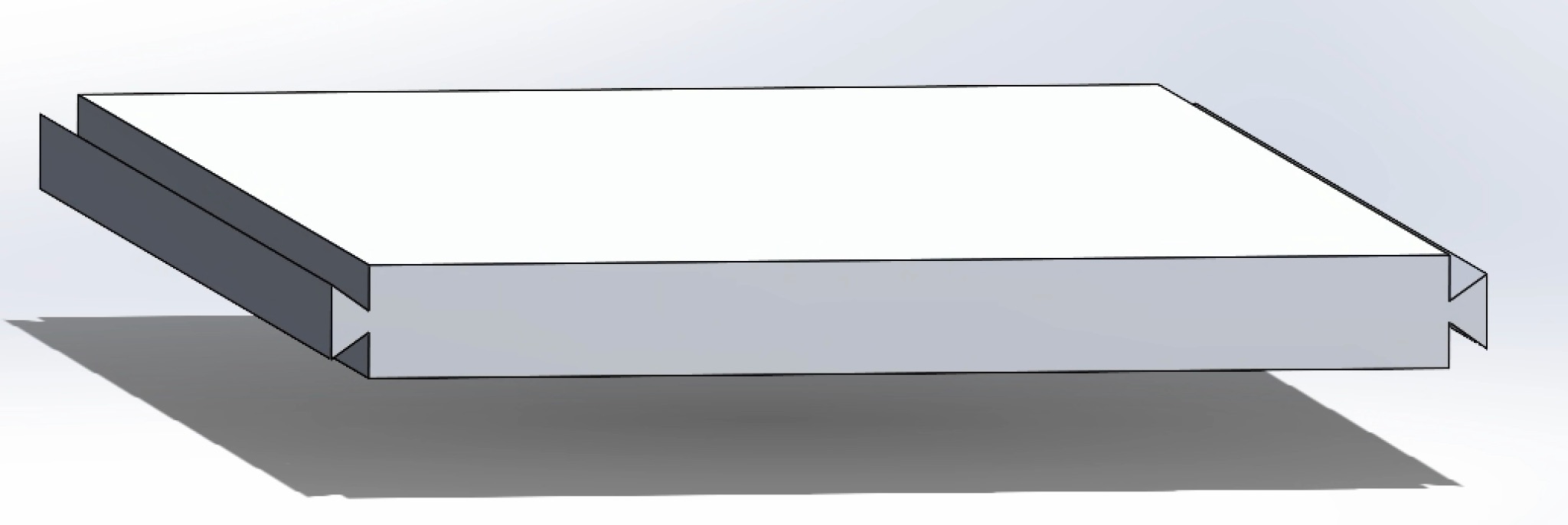
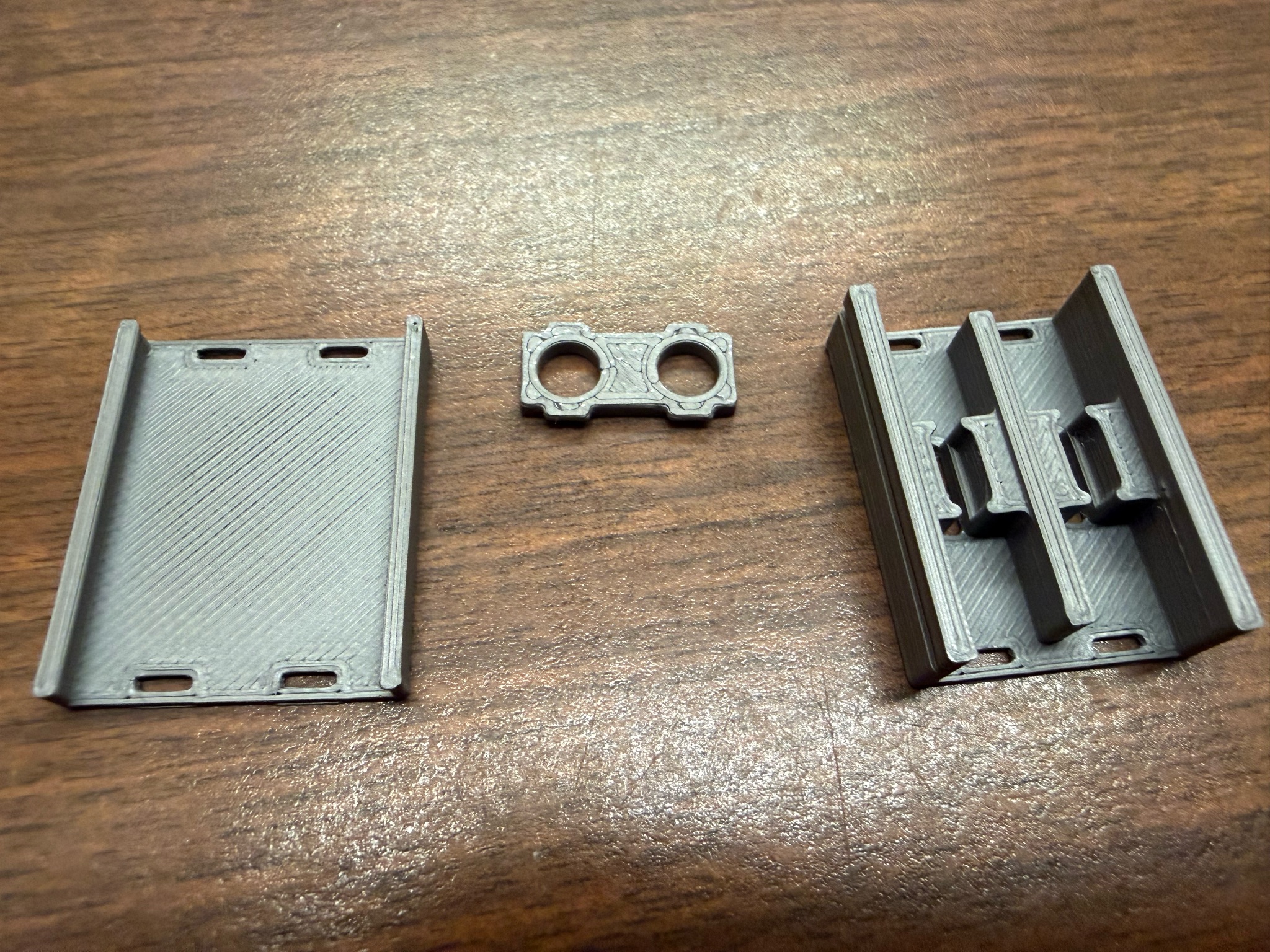
Manufacturing Bottleneck: At this millimeter scale, the dovetail features were smaller than the FDM printer nozzle resolution, leading to fused clearances and poor part fit.
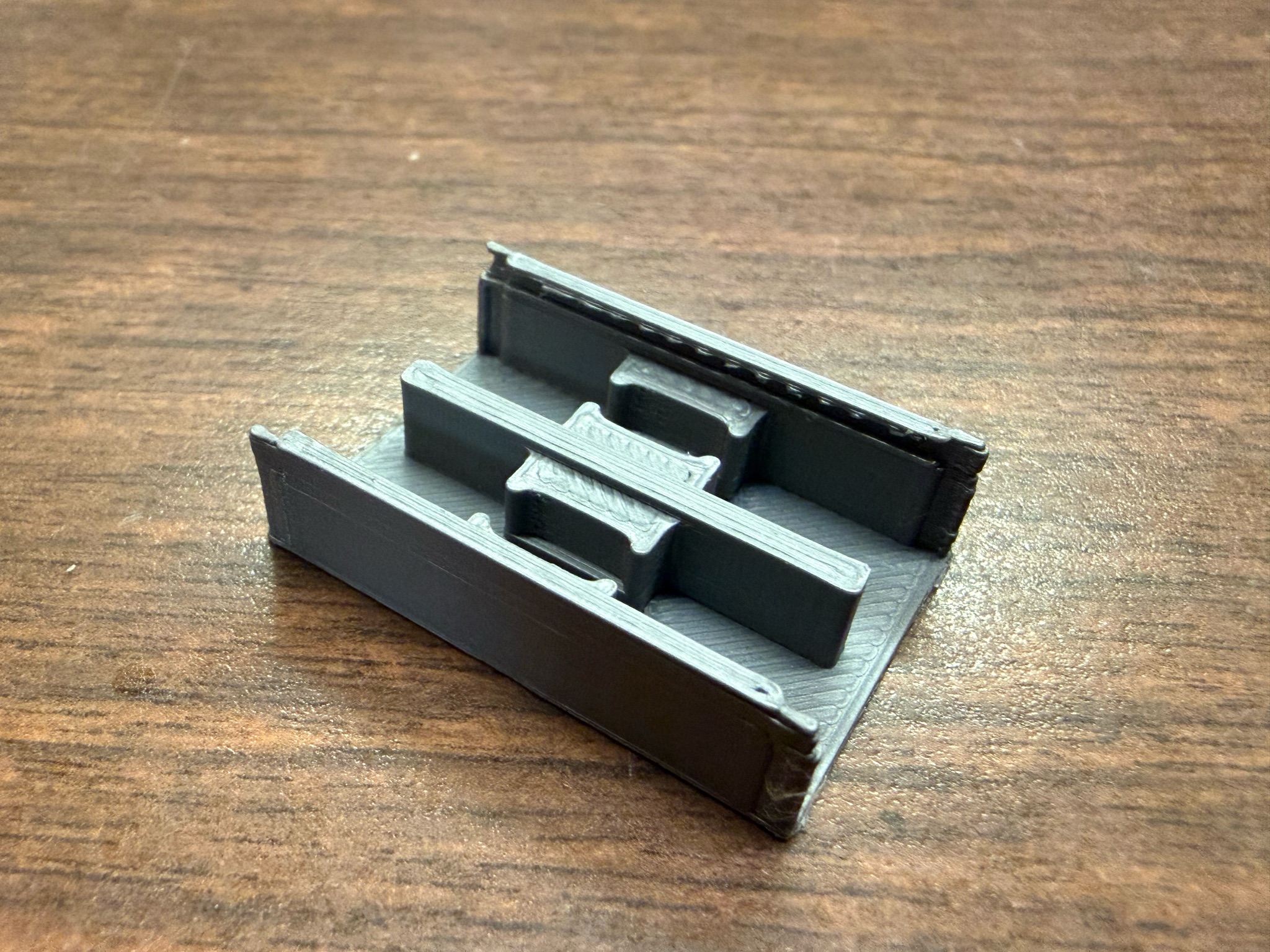
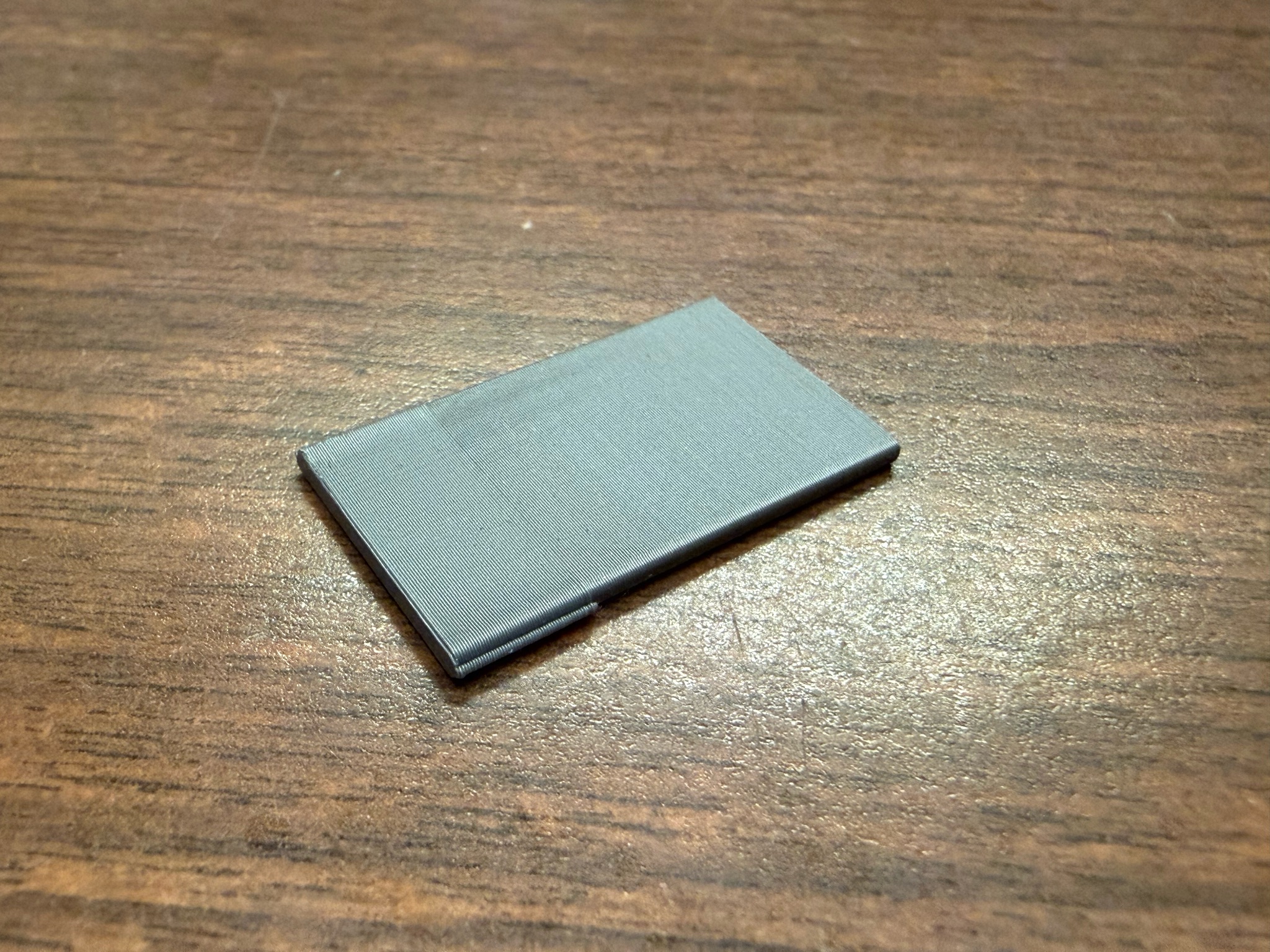
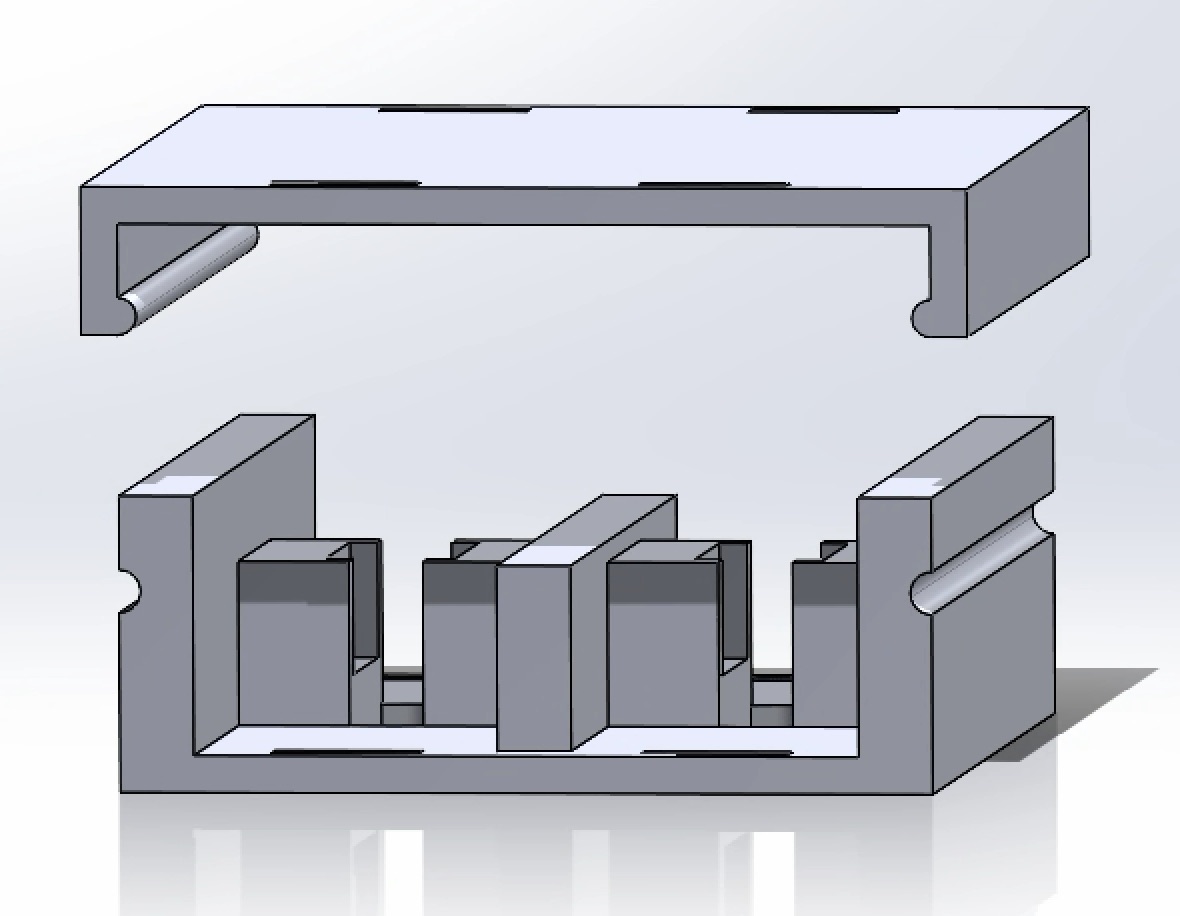
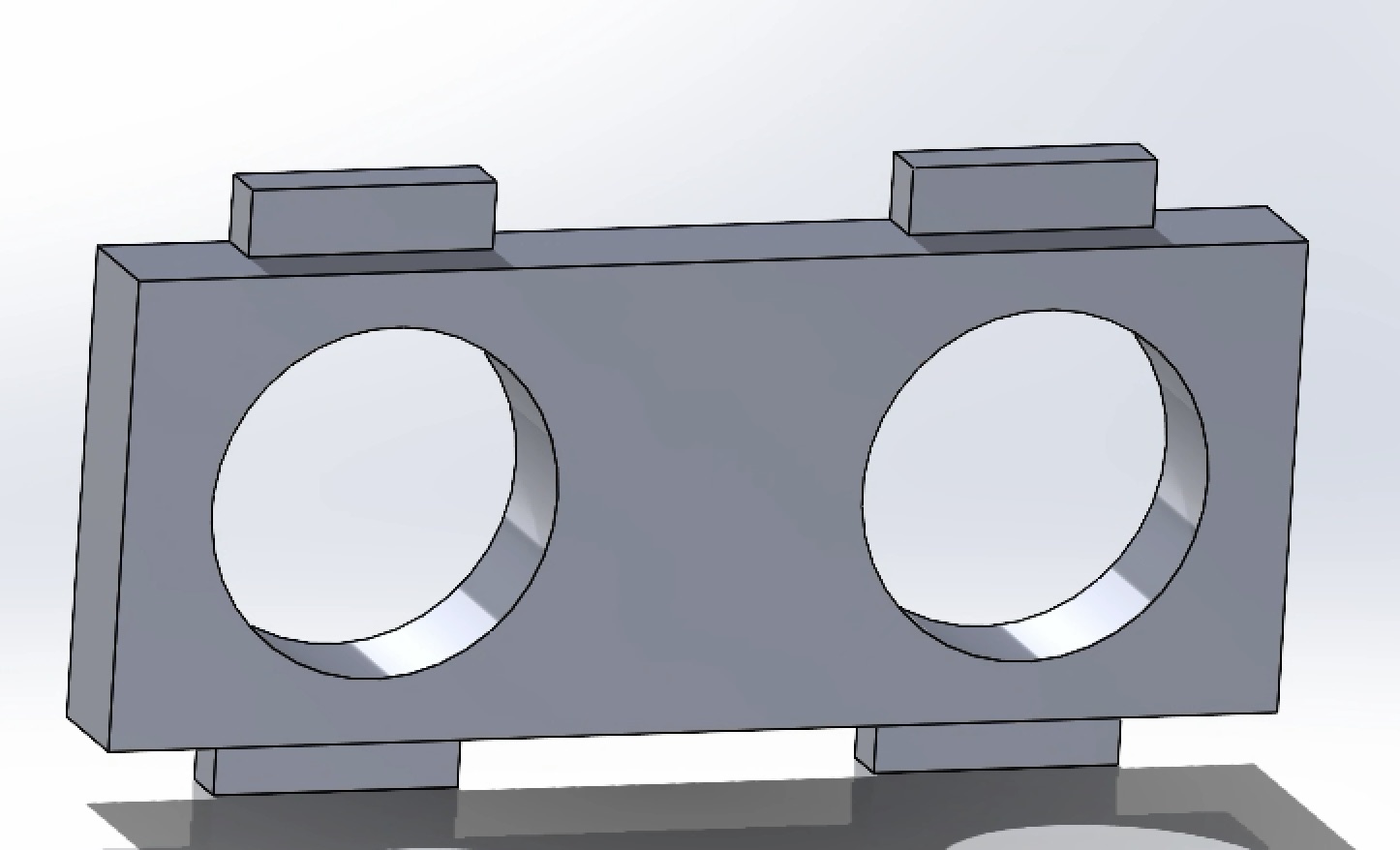
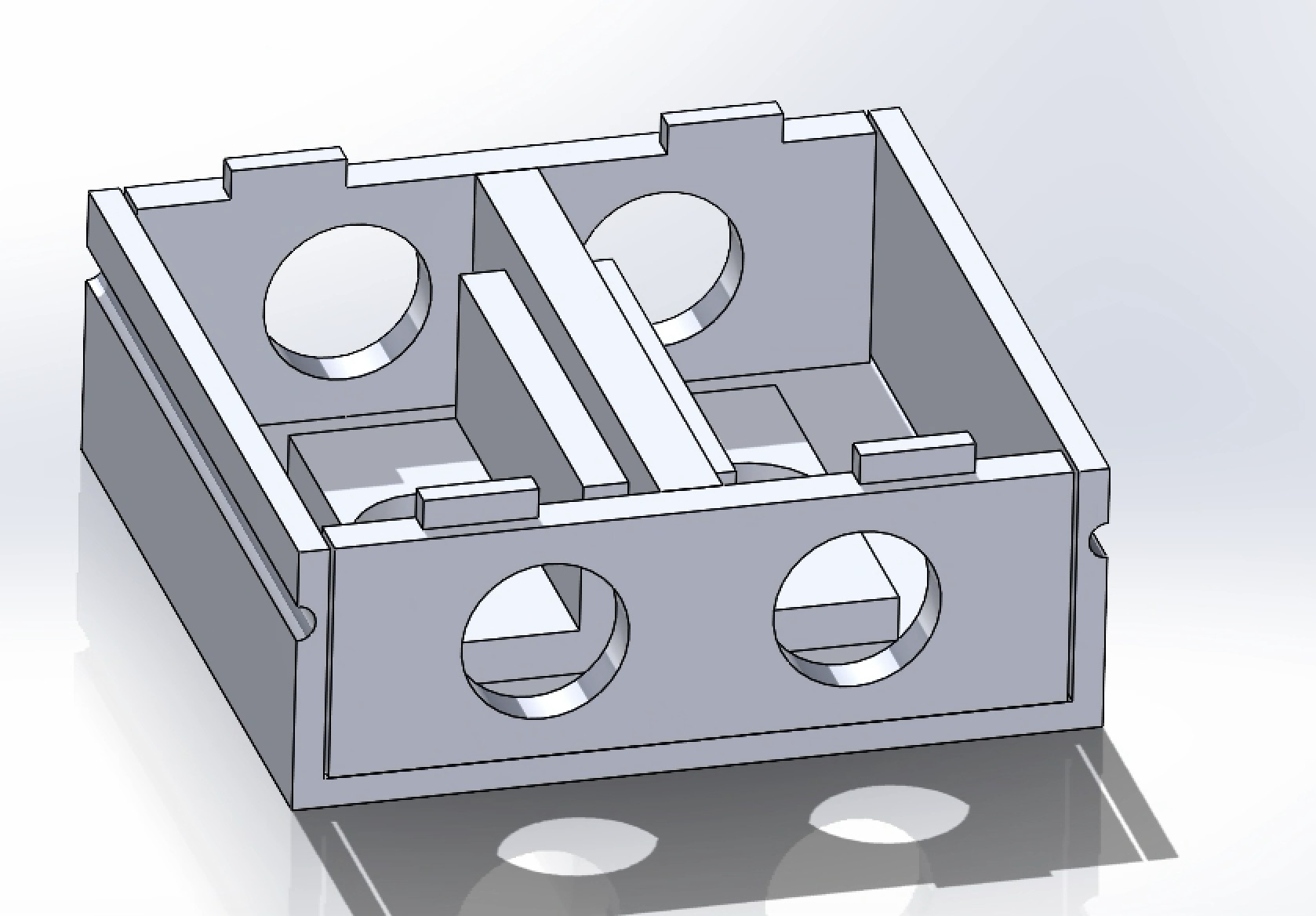
DFM Solution: I redesigned the enclosure using cantilever snap-fit joints and alignment tabs that lock into mating slots on the base and lid. This geometry printed cleanly on the first pass and provided rigid mechanical alignment during assembly.
-
First-Principles Optical Redesign: SLA Waveguides
Using discrete glass right-angle prisms created three major engineering constraints:
- Packaging Volume: Each right-angle prism measured 3 mm per side, consuming 6 mm of linear space per dual-diode site.
- Durability: Optical surfaces were prone to scratching and misalignment during manual assembly.
- Unit Cost: Precision micro-prisms significantly increased the bill of materials (BOM).
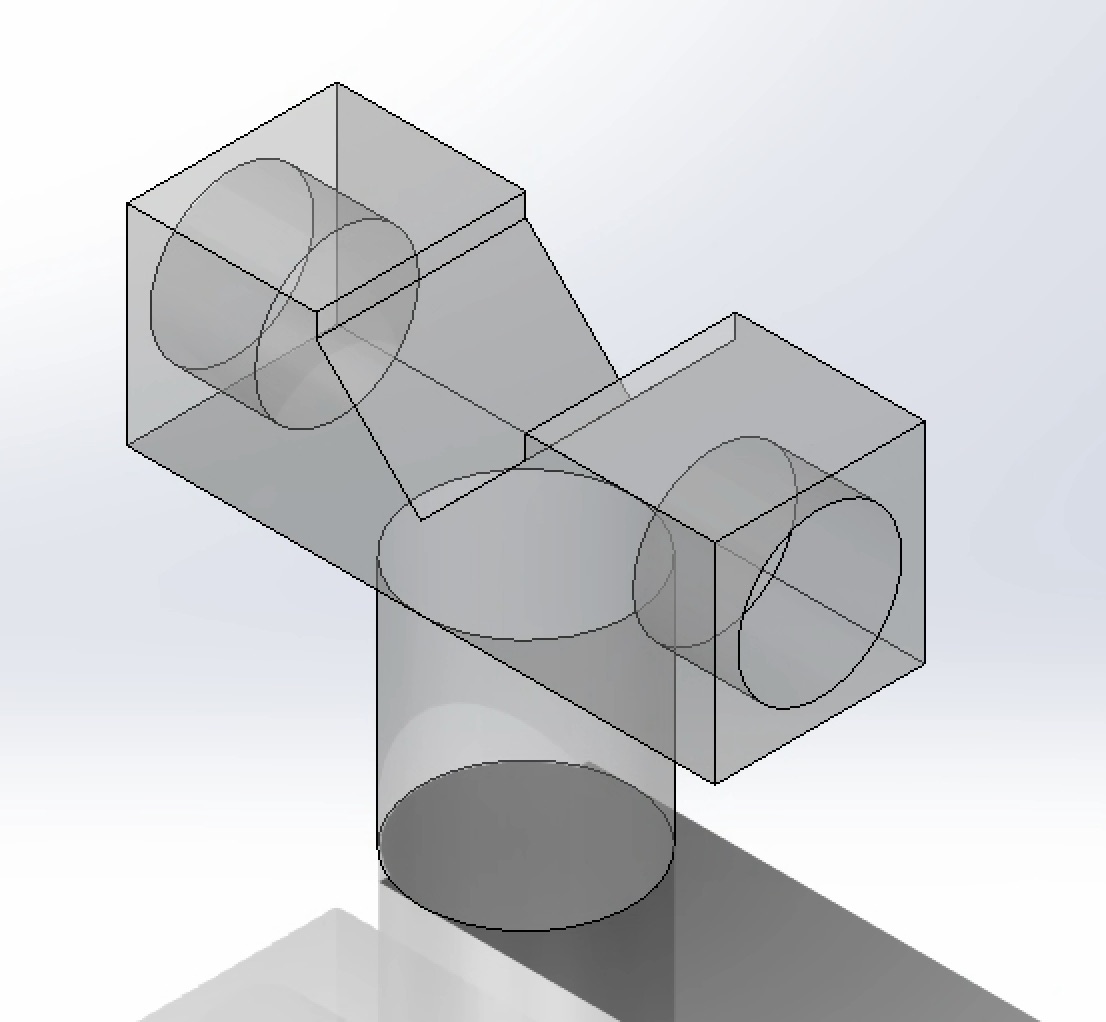
To solve this from first principles, I designed monolithic light channels fabricated via SLA 3D printing (Formlabs Clear Resin V4.1) and PETG. Using the resin's refractive index and Snell's Law (n1 sin θ1 = n2 sin θ2), I calculated the exact critical angle and facet geometry needed to bend the laser beam into the finger tissue. I also simulated ray paths in COMSOL and measured optical transmittance across fabricated samples using a broadband spectrometer.

By embedding the laser diode recess directly inside the printed waveguide and adding anti-rotation keys to the enclosure seat, the new assembly dramatically reduced the optical footprint while protecting the light path.
Final Outcome & Reflection
Outcome: Replacing discrete 3 mm glass prisms with integrated SLA-printed optical channels reduced part count, decreased assembly size, and lowered prototype cost while maintaining accurate light delivery for the 10 mm dual-ratio sensor array.
Reflection & Next Steps: This project reinforced how tightly coupled optical physics and manufacturing tolerances are at the millimeter scale. Designing features that look great in SolidWorks (like micro-dovetails) means nothing if they exceed the resolution limits of the FDM nozzle. Next steps include refining surface post-processing (clear coating and polishing) on the SLA waveguides to further minimize surface scattering losses and tightening snap-fit tolerances for rapid lab testing.
References
- Fantini S, Hueber DM, Franceschini MA, Gratton E, Rosenfeld W, Stubblefield PG, Maulik D, Stankovic MR. Non-invasive optical monitoring of the newborn piglet brain using continuous-wave and frequency-domain spectroscopy. Physics in Medicine & Biology (Foundational Dual-Slope / Self-Calibrating Diffuse Optics Method, Tufts DOIT Lab).
- Sjoding MW, Dickson RP, Iwashyna TJ, Gay SE, Valley TS. Racial Bias in Pulse Oximetry Measurement. New England Journal of Medicine. 2020;383(25):2477-2478.